

Road To Empress Debut: The Interactive Cinema Goes Mainstream in 2025


The September 2025 debut of Road to Empress marked a pivotal moment in entertainment’s ongoing transformation. By combining the narrative intensity of Chinese historical dramas with the interactivity of gaming, New One Studio blurred the boundaries between two industries that once competed for attention.
Learn more: Road To Empress Official Website

Within its first week, Road to Empress reached the top of the paid charts in China, Hong Kong, and Taiwan, while also securing a spot in Steam’s global top ten best-sellers. This rapid rise underscores a structural shift in how audiences consume media and how developers can design experiences that are both watchable and playable.
The Rise of Interactive Cinema
Interactive cinema has existed for decades, from text-based adventures to experimental streaming features. However, most early iterations remained niche. What distinguishes Road to Empress is its ability to fuse a mainstream cultural phenomenon (Chinese historical dramas) with game mechanics that amplify emotional investment.

The numbers illustrate this shift. According to FoxData’s 2025 Market Insights, mobile interactive cinema titles grew by over 60% in downloads across East Asia compared to 2023. Titles such as I’m Surrounded by Classical Beauties! (2024) hinted at rising demand, but it is Road to Empress that signals full-scale adoption.
Many narrative mobile games developed in or for the APAC market tap into local myths, history, and popular media. This resonates deeply with regional audiences and is a major driver for engagement and spending. For example, a fantasy RPG inspired by East Asian lore, like miHoYo's Honkai: Star Rail, can attract a massive local and regional fanbase.
Why Road to Empress Resonates
Three dimensions make this release a watershed case study:
1. Narrative Depth at Cinematic Scale
With over 300,000 words of branching dialogue and 1,200 minutes of filmed sequences, the game matches or exceeds the runtime of most long-form dramas. This creates a sense of completeness that neither traditional series nor conventional mobile games typically provide.
- Viral-Friendly Design

Every dramatic decision, whether poisoned wine, betrayals, or unexpected romances, generates shareable moments. These were amplified on Douyin, Weibo, and Bilibili, creating a free advertising loop.
Chinese Gen Z primarily uses platforms like Douyin (the Chinese version of TikTok) and Xiaohongshu (known as "Red") to discover new content, products, and trends. A 2022 QuestMobile report found that mobile streaming accounted for 37.4% of Chinese Gen Z's total media usage time, higher than social media's 28.5% share.
- Female-Led Market Expansion
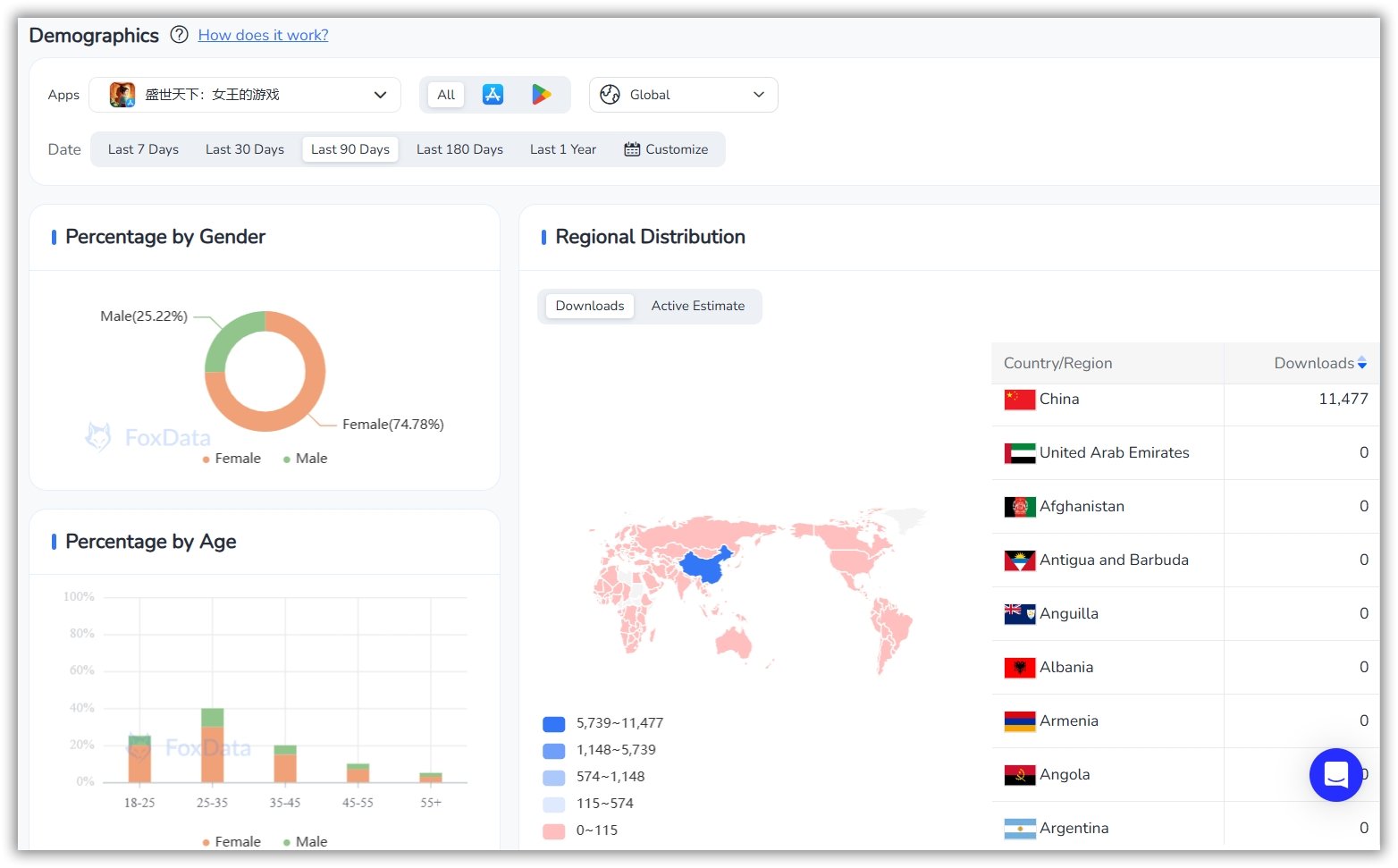
Unlike the male-dominated markets for competitive esports or battle royales, interactive cinema titles increasingly appeal to female gamers. FoxData’s demographic breakdown reveals that women accounted for more than 55% of downloads in narrative-driven mobile experiences in China during 2025. A September 2024 report found that female gamers who pay for games spend 8.5% more monthly than their male counterparts.
Broader Market Implications
For developers and publishers, the success of Road to Empress offers several lessons:
● The Next Growth Frontier is Hybrid Experiences
The strongest titles of the next decade may not fit neatly into the categories of “film” or “game.” Instead, they will blend media forms to deepen engagement. This requires studios to think beyond technical silos and explore new storytelling pipelines.
● Monetization Will Lean on Emotional Capital
Traditional free-to-play monetization models rely on power progression or cosmetic appeal. Interactive cinema has an additional vector: emotional choices. Monetization experiments on exclusive storylines, branching endings, or time-limited romance arcs will expand revenue possibilities.
● Cross-Media Talent is a Strategic Advantage



The casting of established actors such as Huang Yi and Darren Chen demonstrates how crossover talent can attract mainstream attention. For Western studios considering similar approaches, partnerships with streaming platforms or film production houses may become essential.
Risks and Challenges Ahead
Despite the optimism, several structural challenges remain.
Production Costs - Creating 1,200 minutes of filmed content demands a budget closer to television than gaming. Without sufficient monetization or global reach, studios risk overextending.
Market Saturation - As more companies rush to replicate the format, differentiation will depend on execution. A wave of lower-quality projects could dilute consumer trust.
Regulatory Environment - China’s evolving content regulations on games and dramas alike could constrain experimentation. Developers will need to balance narrative ambition with compliance.
Looking Ahead: 2026 and Beyond
The immediate success of Road to Empress will likely accelerate investment in interactive cinema across Asia. Tencent and ByteDance, both of which already dominate short-form video and gaming ecosystems, are expected to invest heavily in hybrid storytelling experiences. Meanwhile, Hollywood and Korean studios are exploring similar experiments, though they currently lag in mobile-first design.
By 2026, the key question will be scalability. Can interactive cinema grow from a regional phenomenon to a global one? If so, the genre could redefine not just games but the entire entertainment stack where players no longer watch or play but live the story.
Final Thought
For strategists and developers, the takeaway is clear: interactive cinema is no longer experimental. With Road to Empress, the model has demonstrated mainstream viability, viral growth mechanics, and revenue potential driven by female audiences.
While risks remain, the opportunity for cross-media innovation has never been more tangible. Those who adapt early may shape not just the next hit app, but the very future of entertainment itself.


